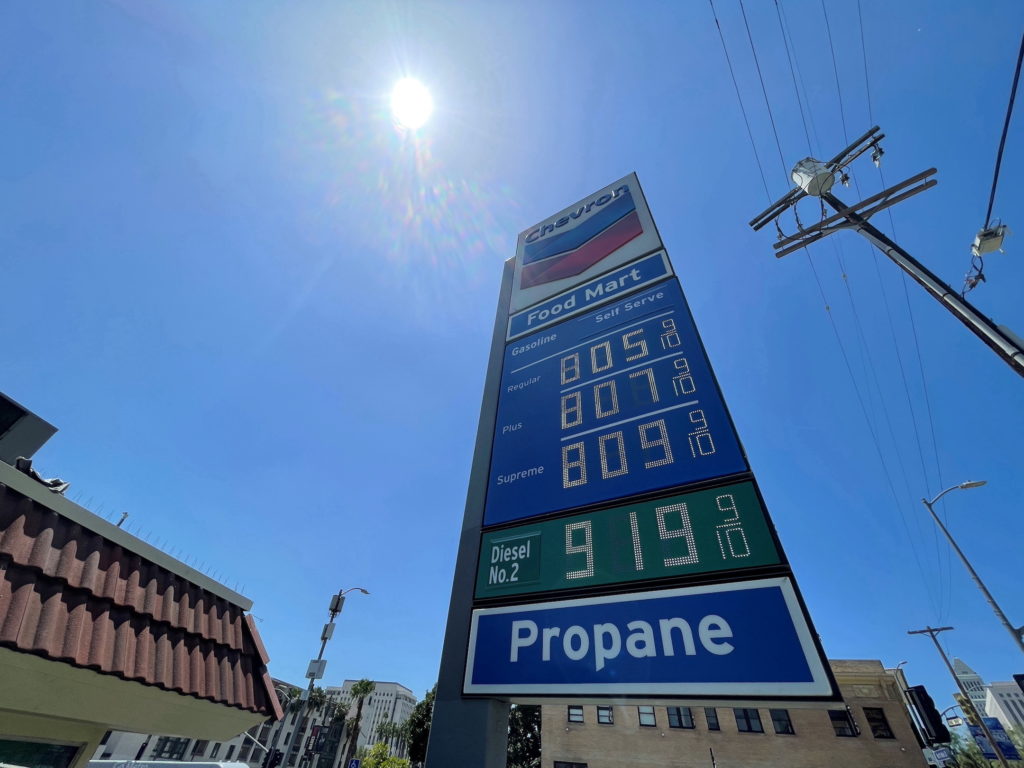
William Brangham:
To help people deal with those costs, the state has started to give out inflation relief payments of just over $1,000 to 23 million Californians. And Governor Gavin Newsom has called for a new windfall tax on oil and gas companies in the face of their record profits. But it is still a difficult time for many.
So, for a closer look at what's behind all of this, I'm joined by Severin Borenstein. He's professor of business and public policy at the University of California Berkeley.
Professor Borenstein, thanks so much for being here.
We heard some genuine impacts on people because of these high prices. People will look at what's happening in California and say, aha, it's California's fees and regulations and environmental rules that are driving up the price of gas there. How much of that is true?
Severin Borenstein, University of California, Berkeley: Well, that's definitely a part of it.
California has higher gas taxes than the rest of the country. It has some environmental fees from a cap-and-trade program and a low carbon fuel standard. And it uses a cleaner-burning gasoline that costs a little bit more to make.
But when you add all that up, right now, that accounts for about 85 cents a gallon. That's a big difference. But that's only a part and less than half of the differential we're seeing right now between California and the rest of the country.
ncG1vNJzZmivp6x7sa7SZ6arn1%2Bjsri%2Fx6isq2ejnby4e9ahsGafkah6sb7InJysZZGnsm6%2FzmakrpuYYrWqs8eeqWahnmKworjIn6arppmWeqK6w2afqK9dqbWmedKtmK2dXZ7Abr7EmpqtoZ6c