JUDY WOODRUFF:
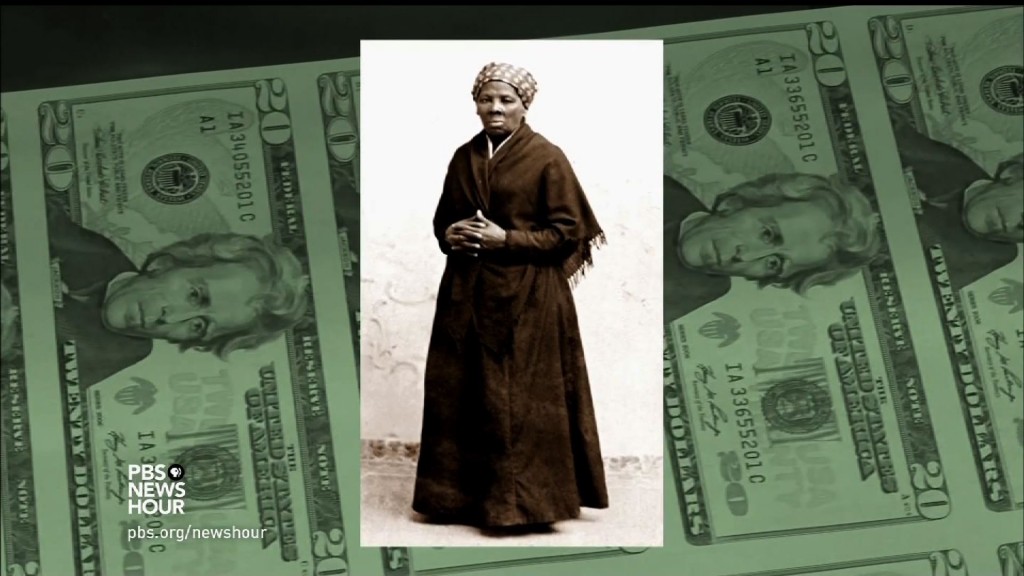
It has been a much anticipated decision, but the United States' currency is in for the first changes in a long time, giving new prominence to civil rights and women's history in this country.
The familiar greenbacks haven't seen a new face in almost 90 years. And when the Treasury Department announced last year a woman might grace a bill for the first time in history, there was jubilation from American women, but a backlash from Alexander Hamilton fans, who were upset over anyone replacing him on the $10 bill.
The first secretary of the treasury, Hamilton has become a darling of popular culture with the runaway success of the Broadway musical named after him. There was plenty of feedback and even some indignation at the suggestion Hamilton might be replaced.
Today, after much speculation, Treasury Secretary Jack Lew announced it's the seventh president of the United States, Andrew Jackson, who loses his spot on the front of the $20 bill. He will be replaced by Harriet Tubman, the Civil War anti-slavery activist and a leader of the Underground Railroad.
Hamilton stays put on the $10 bill, but the reverse side will now include leaders of the women's suffrage movement, including Susan B. Anthony, and another abolitionist, Sojourner Truth.
The $5 bill also gets an update to include civil rights leaders such Marian Anderson, Eleanor Roosevelt, and Martin Luther King Jr.
I caught up with Treasury Secretary Lew earlier today.
Secretary Jack Lew, thank you for joining us.
JACK LEW, Secretary of the Treasury: Great to be with you, Judy.
ncG1vNJzZmivp6x7sa7SZ6arn1%2Bjsri%2Fx6isq2ejnby4e8eormagkae%2FqrHTZquump2Wu263yJyinpxdlrulvsSwZKOZk6DAsLqMqJ2fZaSdsm6y0ailrWWfm3q6u9SrZGtoXZe2rbiEfmlecGBahYM%3D